
Credit Cards and Cashless Payments in Japan
A practical guide to cards, cashless payment, identity checks, billing, security, and address updates: rules, counters, documents, timing, costs, and follow-up updates.
ARTICLE MAP Reading Map
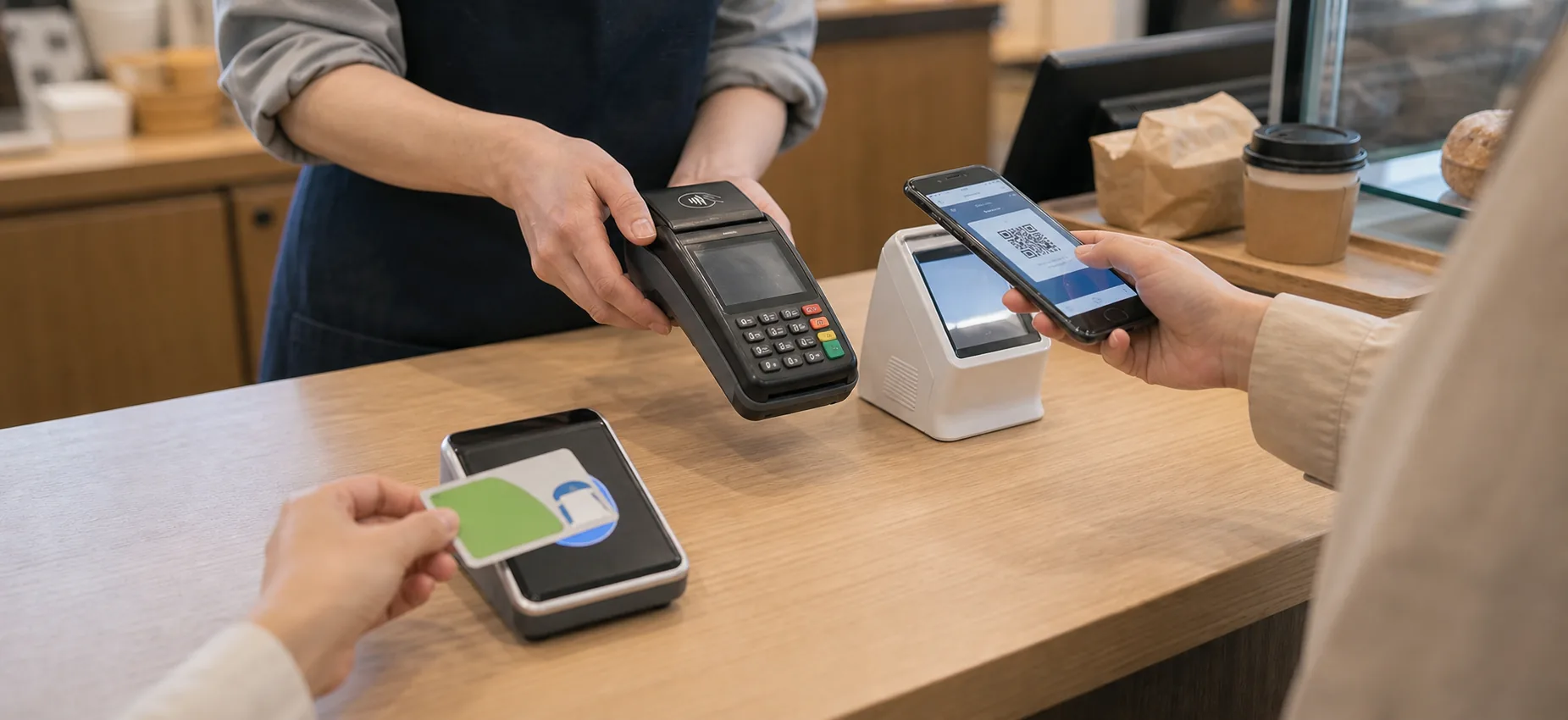
Japan’s cashless payment ratio reached 42.8% in 2024, passing the government’s 40% target, but daily life still needs a mix of cash, transit IC cards, QR payment, debit, and credit cards. For foreign residents, Suica, PASMO, ICOCA, and QR apps can work immediately, while credit cards often require 6 months to 2 years of residence and stable income.
Credit cards
Cards often considered easier for new residents include Rakuten Card, Epos Card, JCB CARD W, American Express Green, and Sumitomo Mitsui NL. Annual fees range from free to about JPY 13,200, and point returns commonly run from 0.5% to 1%, with higher promotional rates at convenience stores or the issuer’s own marketplace.
Prepare residence card, My Number Card (or qualification confirmation document), employer information, payslips, and a Japanese bank account. Approval depends on length of residence, income such as JPY 2,000,000 or more, credit history, and remaining residence period. A CIC credit report can show past payment problems.
QR payment
PayPay is the most visible QR payment network, with wide use at convenience stores, drugstores, restaurants, taxis, vending machines, and some utility counters. Registration needs a Japanese phone number, and bank linkage usually requires identity verification.
Other options include Rakuten Pay, d Barai, au PAY, Merpay, and FamiPay. The practical split is simple: use QR payment for small daily purchases, campaigns, and local stores; keep a credit card or bank-linked method as backup when app balance or monthly limits become a problem.
IC cards
Suica, PASMO, ICOCA, and other major transit IC cards have been interoperable nationwide since 2013. They work for trains, buses, convenience stores, vending machines, some taxis, lockers, and station-area shops.
A physical card is easy to understand, while mobile Suica or PASMO in Apple Wallet or Android can be faster once set up. Keep JPY 3,000 to 5,000 charged if you commute. If foreign-issued cards stop charging mobile Suica, prepare PayPay, a Japanese debit card, or cash recharge as backup.
Monthly payment mix
For monthly spending around JPY 100,000, one realistic split is credit card JPY 40,000 to 60,000 for utilities, online shopping, subscriptions, and large bills; PayPay or other QR apps JPY 20,000 to 30,000 for small stores; IC card JPY 5,000 to 15,000 for transport; and cash JPY 10,000 to 20,000 for clinics, local restaurants, shrines, or small cash-only shops.
Money Forward ME and similar apps can connect bank accounts, cards, PayPay, and Suica for automatic classification. The free plan may be enough for a simple setup; people with multiple banks and cards often need the paid tier.
Common mistakes
Do not apply for several credit cards immediately after arrival. Rejections can pile up before you have 6 months of local income. Do not rely only on overseas cards because foreign transaction fees can add 1.6% to 3%. Also do not assume every izakaya, clinic, taxi, or local shop takes cards.
Set a small cash reserve and check address updates after moving. Banks, card issuers, mobile operators, securities accounts, and delivery apps each need their own address update.
Useful terms
- Kureka: credit card
- PayPay: major QR payment app
- Suica / PASMO / ICOCA: transit IC cards
- Cashless: cashless payment
- Auto charge: automatic IC card recharge