
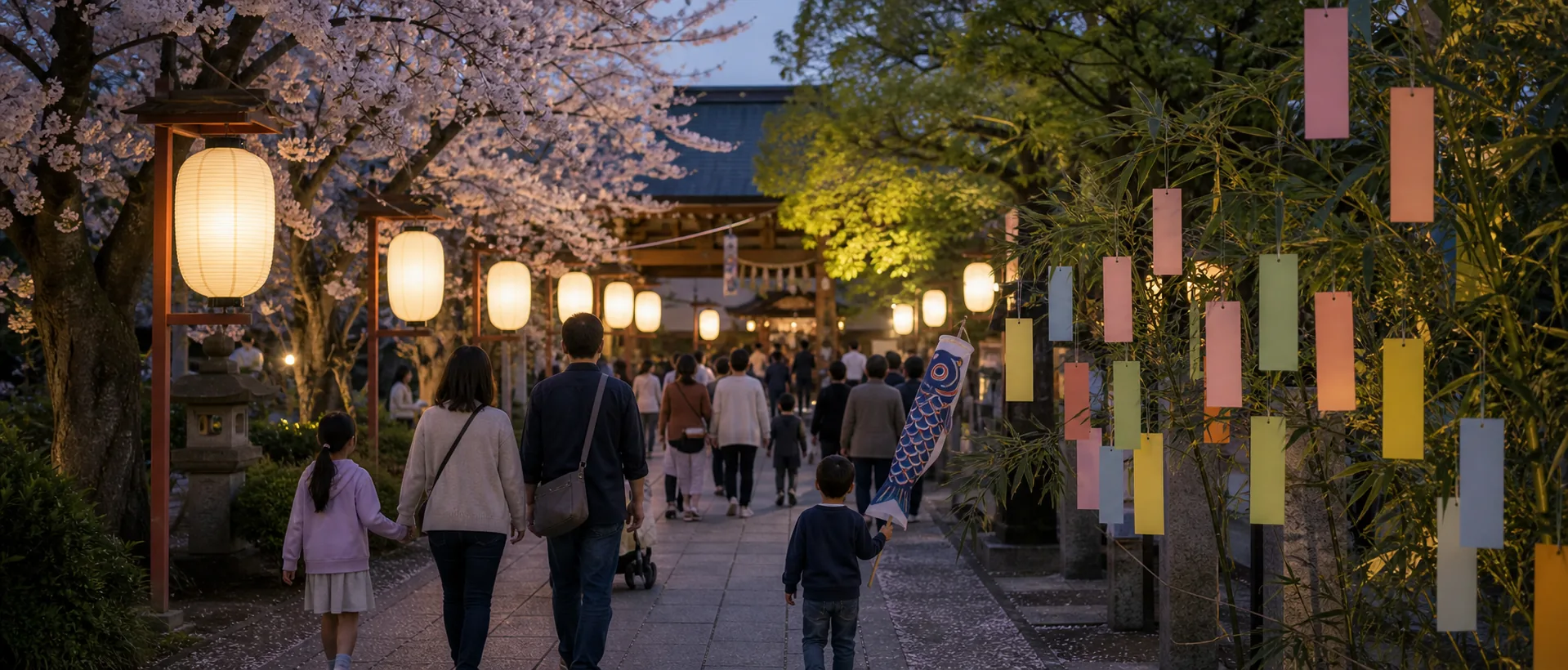
Japan annual events: a 12-month festival calendar
Follow New Year, Setsubun, hanami, Golden Week, Tanabata, Obon, autumn leaves, Shichi-Go-San, and year-end customs by month.
ARTICLE MAP Reading Map
Japan’s annual events mix household practice, school calendars, shrine visits, shopping streets, weather, and public holidays. The useful way to read them is by month, because train reservations, shop closures, and crowd peaks often matter as much as the ritual itself.
January to March
New Year runs mainly from January 1 to 3. Families visit shrines for hatsumode, eat osechi that can cost ¥10,000 to ¥50,000, give otoshidama of about ¥1,000 to ¥10,000, and write kakizome on January 2. Many banks, offices, and small shops stay closed until January 2 or 3, while New Year cards are usually mailed between December 15 and 25.
Nanakusa on January 7 uses 7 spring herbs in rice porridge. Coming of Age Day is the second Monday of January; after the 2022 legal change, adulthood begins at 18, but many ceremonies still focus on people turning 20.
Setsubun is on February 3 in most years, with bean throwing and ehomaki rolls that often cost ¥500 to ¥1,500. Valentine’s Day on February 14 still has a chocolate-giving custom, Hina Matsuri on March 3 displays dolls for girls, and White Day on March 14 reverses the gift direction.
March to May
Hanami usually peaks from late March to early April in the Tokyo area. The Japan Meteorological Agency announces the sakura bloom, and in an average recent pattern Tokyo blooms around March 24 and reaches full bloom near March 30.
Tokyo viewing spots include Ueno Park, Shinjuku Gyoen, Chidorigafuchi, Meguro River, and the Sumida River area. Popular picnic sites can require claiming a spot around 5:00 to 7:00 in the morning, especially on weekends.
April 1 is the start of many school years and company years. Golden Week from April 29 to May 5 combines Showa Day, Constitution Memorial Day, Greenery Day, and Children’s Day, so Shinkansen and flights should be booked 1 to 2 months ahead.
Children’s Day on May 5 brings koi flags, kashiwa mochi, chimaki, and shobu baths. Mother’s Day is the second Sunday of May, and flower shops become crowded earlier than many visitors expect.
June to August
The rainy season usually runs from June into early July in much of Honshu. Father’s Day is the third Sunday of June, and Tanabata on July 7 uses bamboo branches and written wishes. Sendai Tanabata is held from August 6 to 8 and draws around 2 million visitors in busy years.
Obon is usually observed around August 13 to 16. Families visit graves, bon odori dances take place in local neighborhoods, and Kyoto’s Gozan Okuribi fires are lit on August 16.
Major summer festivals include Kyoto Gion Matsuri from July 1 to 31, with main processions on July 17 and 24; Osaka Tenjin Matsuri on July 24 and 25; Aomori Nebuta from August 2 to 7; Tokushima Awa Odori from August 12 to 15; and Akita Kanto from August 3 to 6.
September and October
Respect for the Aged Day is the third Monday of September. Jugoya, or Otsukimi, falls in September or October by the lunar calendar; the common display uses 15 dumplings and susuki grass.
Sports Day is the second Monday of October. Halloween on October 31 is concentrated in entertainment districts, especially Shibuya. The Shibuya crowd was reported around 40,000 at its 2018 peak and was controlled closer to 10,000 after stricter 2023 measures.
Autumn leaves begin in northern and mountain areas before reaching cities. Tokyo often peaks in mid to late November, while Kyoto is usually late November to early December.
November and December
Culture Day is November 3. Shichi-Go-San is traditionally November 15, when 3-year-old girls, 5-year-old boys, and 7-year-old girls visit shrines in kimono and receive Chitose-ame, but modern families often choose a nearby weekend.
Labor Thanksgiving Day on November 23 has roots in Niiname-sai harvest rites. Around December 22, the winter solstice is marked with yuzu baths and kabocha in many households.
Christmas in Japan is mostly commercial and couple-oriented rather than a public holiday. Cakes often cost ¥3,000 to ¥7,000, KFC party sets can run ¥3,800 to ¥5,800, and reservations may open from November 1.
Omisoka on December 31 centers on toshikoshi soba, joya no kane temple bells rung 108 times, and NHK Kohaku from about 21:00 to 23:45. Transport runs late in some cities, but local services vary by operator.
Planning traps
Book travel 1 to 2 months ahead for Golden Week, Obon, and New Year. Reserve Christmas cakes or KFC in November, do not assume Shichi-Go-San must be exactly November 15, and remember that Kyoto autumn leaves are often late November into early December.
For hanami, weather changes the plan. Rain, wind, or a cold week can shift the best day, and the famous river or park may be less useful than a smaller local place with toilets, lighting, and an exit route.
Useful terms
- hatsumode
- Setsubun
- hanami
- Golden Week
- Tanabata
- Obon
- Shichi-Go-San
- Omisoka