
Kyoto crafts and tea: Nishijin textile, Kiyomizu ware, Yuzen, and matcha
Kyoto's crafts are still produced and sold. This guide compares Nishijin textile, Kiyomizu ware, Kyo Yuzen, tea ceremony experiences, prices, and markets.
ARTICLE MAP Reading Map
Kyoto’s traditional craft industries have shrunk. Related workers fell from about 100,000 in the 1980s to under 20,000 in the 2020s, but Nishijin textiles, Kyo Yuzen dyeing, and Kiyomizu ware are still produced and sold.
Nishijin textile
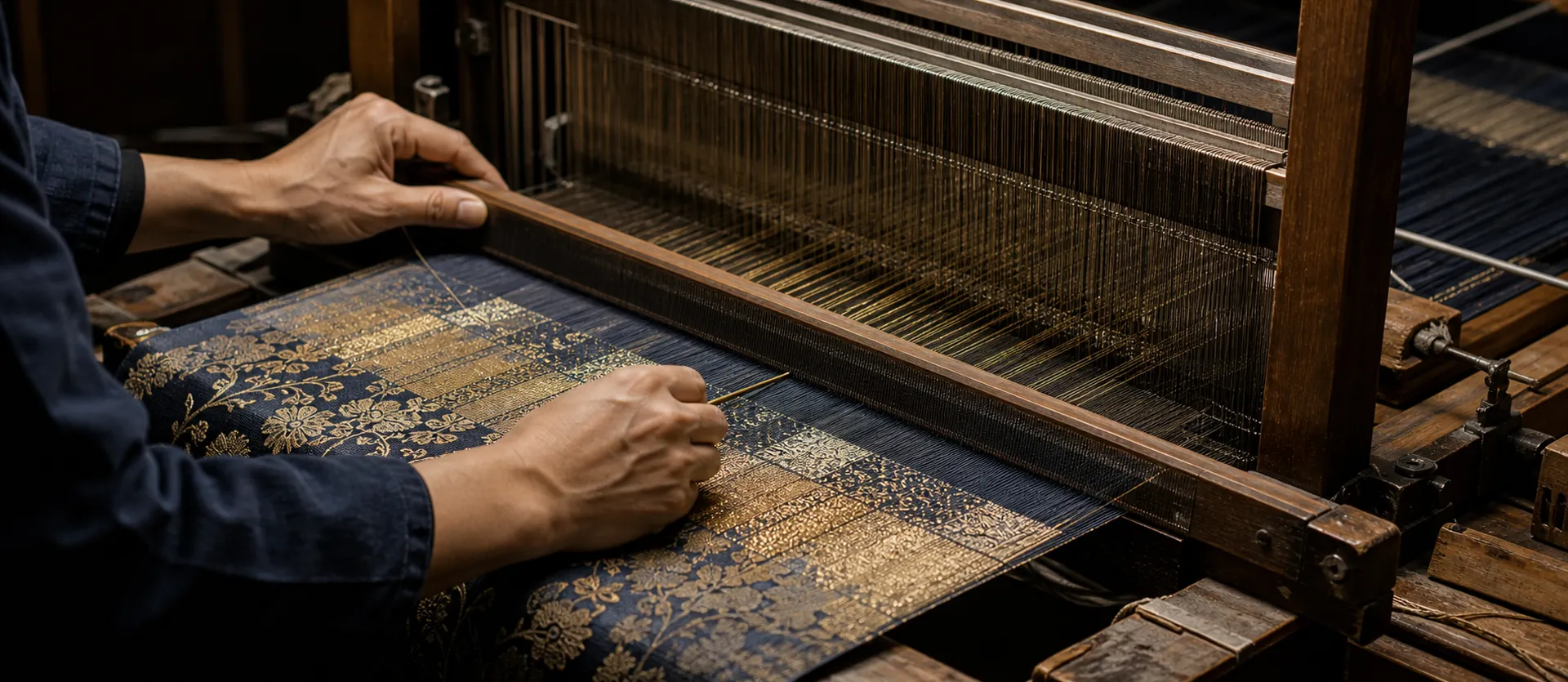
Nishijin-ori is a high-grade textile from Kyoto’s Nishijin area, known for complex patterned weaving and kimono obi fabric. Nishijin Textile Center near Horikawa-Imadegawa has displays, hand-weaving experiences, and kimono activities. Simple weaving starts around ¥2,000 for about 30 minutes.
The production value of Nishijin textiles fell from around ¥300 billion in the 1990s to around ¥30 billion in the 2020s. A formal Nishijin obi can retail for ¥100,000-500,000, so visitors usually start with viewing, small goods, or short workshops.
Kiyomizu ware and Kyo ware
Kiyomizu-yaki and Kyo-yaki refer broadly to Kyoto ceramics. Unlike Arita ware or Kutani ware, Kyoto ceramics do not have one single style because potters from many regions gathered in the city.
Gojo-zaka and Chawan-zaka have kiln shops and pottery stores. Everyday bowls often cost ¥1,500-5,000, while individual artist pieces can cost ¥10,000-50,000. The August pottery festival and October-November Kiyomizu-yaki Danchi market can be 20-50% cheaper than normal shops.
Kyo Yuzen
Kyo Yuzen is a Kyoto dyeing technique that uses paste-resist outlines on silk before adding color. Compared with Kaga Yuzen’s realistic plants and birds, Kyo Yuzen tends to be more decorative and bright.
Hand-painted Yuzen workshops usually cost ¥3,000-5,000 and take 60-90 minutes. Participants often color a handkerchief or small item to take home. Marumasu Nishimuraya in Nakagyo Ward is one established workshop name.
Tea ceremony experiences
| Type | Price | Time | Content |
|---|---|---|---|
| Tourist-friendly | ¥1,500-3,000 | 30-45 min | English explanation, usucha, wagashi |
| Practice-style | ¥5,000-10,000 | 60-90 min | Japanese-led, basic temae |
| Full chaji | ¥15,000-30,000 | 3-4 hours | Kaiseki, koicha, usucha |
Tourist-oriented tea rooms are common in Higashiyama and Gion machiya spaces. Practice-style sessions are easier with Japanese around N3 or above. Full chaji experiences often require 4-6 people and booking 1-2 weeks ahead.
Where to buy
Direct sources such as Nishijin Textile Center and kiln shops around Kiyomizu-zaka are easiest for clear explanations. Around Shijo-Kawaramachi, Kyukyodo is useful for stationery and incense, while Ippodo is a reliable tea shop.
For markets, Hyakumanben Chion-ji’s handmade market runs on the 15th with about 450 stalls, and To-ji’s Kobo Market runs on the 21st with about 1,000 stalls. Check materials, maker names, and production area because casual goods and serious craft pieces are mixed together.