
Sakyo Ward: Kyoto University, Kitayama, and daily life upstream
Sakyo Ward shows a quieter Kyoto shaped by Kyoto University, Demachiyanagi, the Kamo River delta, Kitayama, Eizan Railway, Kurama, and Kibune.
ARTICLE MAP Reading Map
Sakyo Ward sits on the east side of the Kamo River and north of Higashiyama, about 20-30 minutes from Shijo by rail or bus. It contains Kyoto University and feels more academic and residential than Shijo-Kawaramachi or the main temple routes.
Demachiyanagi
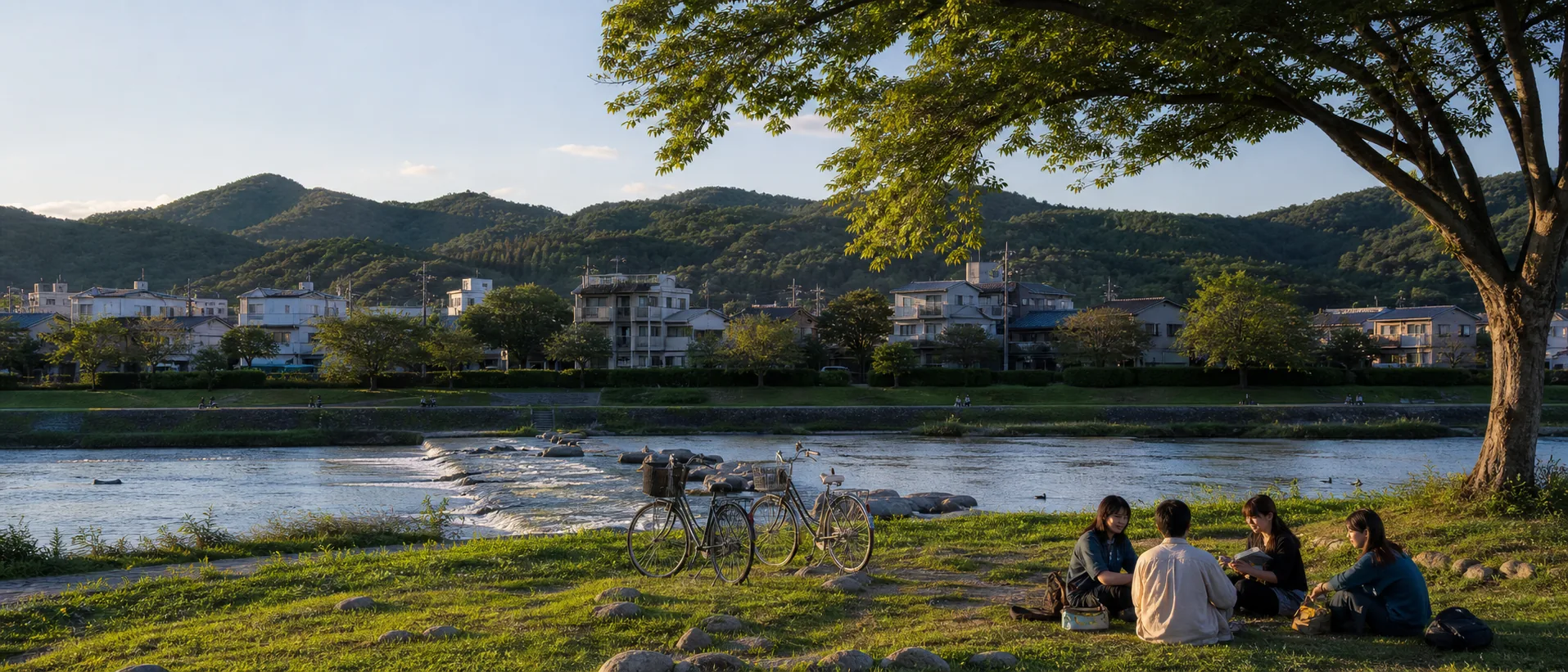
Demachiyanagi Station is the end of the Keihan Main Line and the starting point of the Eizan Railway. Three minutes south of the station, the Kamo River Delta marks the meeting of the Kamo and Takano rivers. The stepping stones are one of Kyoto’s most ordinary and beloved public spaces.
Demachi Masugata Shopping Street is a small local arcade of about 160 m. Demachi Futaba, known for mame daifuku, often has a line, so morning is easier than late afternoon.
Kyoto University area
Kyoto University’s Yoshida Campus sits around the Hyakumanben intersection and covers about 800,000 square meters. The Clock Tower Centennial Hall is a Taisho-era building that visitors can enter easily.
On the 15th of each month, Hyakumanben Chion-ji holds a handmade market with about 450 stalls. Around the university, 1K and 1R rents often run ¥40,000-60,000, roughly 20-30% lower than Shijo-Kawaramachi. Set meals around campus are often ¥700-1,000.
Kitayama
Kitayama-dori sits near Kitayama Station on the Karasuma Subway Line. The Kyoto Botanical Gardens, Garden of Fine Arts, and quiet cafes line the area. Admission is ¥200 for the botanical gardens and ¥100 for the Garden of Fine Arts.
From Kitayama, Kamigamo Shrine is about 20 minutes on foot. The shrine is a World Heritage site and free to enter, and it is often quieter than Shimogamo Shrine. The shake-machi priest-house area along Myojin River adds another 15-20 minutes of walking.
Eizan Railway
The Eizan Railway starts from Demachiyanagi and splits into 2 routes, the Kurama Line and Eizan Main Line. On the Kurama Line, the maple tunnel between Ichihara and Ninose is visible from the train from mid-November to early December.
From Kurama Station, Kurama-dera is about 5 minutes on foot and costs ¥300 to enter. The mountain path from Kurama-dera’s main hall to Kibune Shrine takes about 1.5 hours. Kibune’s summer river-platform lunches often cost ¥5,000-8,000.
Daily rhythm
Sakyo supermarkets are often small co-ops or local stores rather than giant malls, and many close before 22:00. Larger shopping may require going toward Kitaoji Vivre. Clinics cluster along Kitaoji-dori and Imadegawa-dori.
For a stay of 3 nights or more, Sakyo Ward is a good place to see daily Kyoto rather than only temples. Spend an afternoon at the Kamo River Delta, visit the Hyakumanben market, and take Eizan Railway toward Kurama at a slower pace.