
Osaka food culture: konamon, dashi, and everyday Kansai flavor
Read Osaka eating through takoyaki, okonomiyaki, kushikatsu, udon, Tsuruhashi yakiniku, and neighborhood price zones.
ARTICLE MAP Reading Map
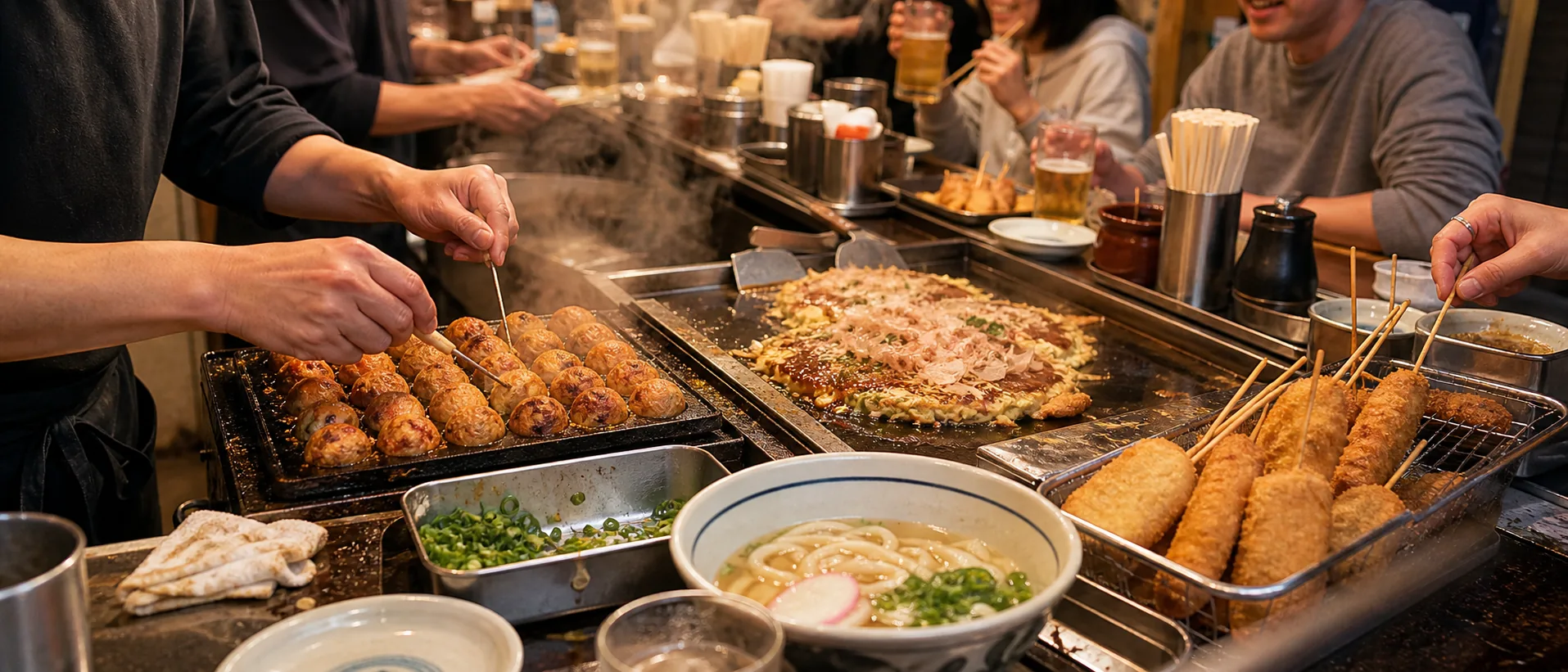
Osaka was called tenka no daidokoro, the nation’s kitchen, because Edo-period rice, seafood, kombu, and commercial food routes passed through the city. Today’s eating culture still rests on 2 bases: kombu-led dashi and flour-based konamon.
Konamon
Takoyaki is the easiest Osaka food to recognize. A common order is 8 pieces for about ¥500 to ¥700, with a crisp outside and a hot, soft center. Wanaka in Namba, Kukuru in Dotonbori, and Koga Ryu in America-mura are useful reference points.
Okonomiyaki shows the same flour culture at a table scale. Osaka style mixes batter, cabbage, pork, and seafood before grilling, while Hiroshima style layers batter, cabbage, noodles, and egg. Expect about ¥800 to ¥1,200 at casual shops such as Chibo or Tsuruhashi Fugetsu.
Kushikatsu in Shinsekai
Kushikatsu is tied to Shinsekai and the area around Tsutenkaku. A skewer can cost ¥100 to ¥200, and many diners order around 10 pieces with cabbage and beer.
The old rule is simple: no double dipping in the shared sauce. Many shops now use individual sauce containers after 2020 hygiene changes, but the phrase still teaches the basic rhythm. Daruma, Yaekatsu, and Kushikatsu Tanaka are names visitors often see.
Tsutenkaku is 108 meters tall, and the observatory is around ¥900. It is not food, but it explains why Shinsekai mixes sightseeing, cheap drinking, and fried skewers in the same walking radius.
Osaka udon
Osaka udon is softer than Sanuki udon and uses a light soup built from kombu and usukuchi soy sauce. The taste is pale in color but not weak; the umami comes from dashi rather than dark soy.
Kitsune udon, topped with sweet simmered aburaage, is closely associated with Osaka. Dotonbori Imai is a well-known example at roughly ¥750 to ¥1,000, while standing udon around Umeda or Namba can be ¥350 to ¥550.
Tsuruhashi yakiniku
Tsuruhashi around the JR Osaka Loop Line is one of Japan’s largest Korean commercial areas. The station exits lead quickly into smoke, narrow lanes, kimchi shops, and yakiniku signs.
There are roughly 80 yakiniku shops in the area. Lunch can be ¥1,000 to ¥2,000, while dinner often runs ¥3,000 to ¥6,000 per person depending on beef cuts and drinks.
Where to eat
Dotonbori has neon, river signs, and many first-visit restaurants, but prices are often higher because the area is built for tourism. Ura-Namba is better for local izakaya, tachinomi, and ¥500 to ¥2,000 evening stops.
Shinsekai fits a ¥1,000 to ¥2,000 kushikatsu crawl. Tsuruhashi works for yakiniku from lunch to dinner. Tenma and Tenjinbashisuji are strong for office-worker drinking, small restaurants, and low-pressure meals near Osaka Metro and JR stations.
Tenjinbashisuji Shopping Street runs about 2.6 kilometers and is often described as Japan’s longest shopping street. Use it for daily Osaka rather than only sightseeing: croquettes, coffee, udon, cheap set meals, and shopping-arcade weather cover all sit in the same route.
Useful terms
- tenka no daidokoro
- dashi
- konamon
- kushikatsu
- kitsune udon
- tachinomi