
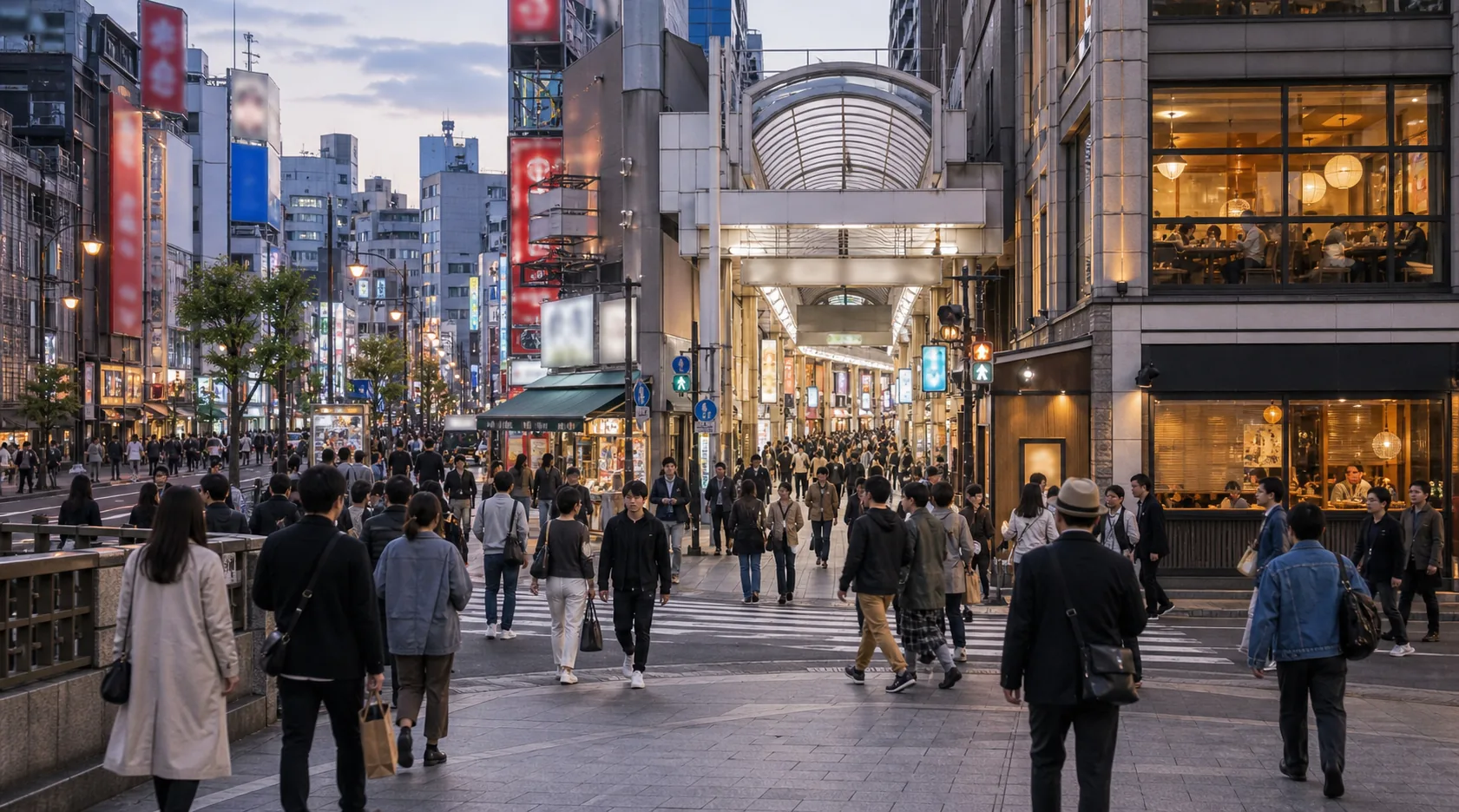
Namba and Shinsaibashi: Dotonbori, shopping streets, and Osaka's southern center
Namba and Shinsaibashi form Osaka's southern center. Read Dotonbori, Shinsaibashi-suji, Kuromon Market, Sennichimae, Ura-Namba, and the station network in one route.
ARTICLE MAP Reading Map
Namba and Shinsaibashi are the core of Osaka’s Minami area. Dotonbori, Shinsaibashi-suji Shopping Street, Kuromon Market, Sennichimae, Ura-Namba, and Nankai Namba Station sit close enough to connect on foot, so the same area handles sightseeing, shopping, restaurants, theaters, and airport access.
Dotonbori
Dotonbori is the canal running east to west through the busiest part of Minami. The Glico sign at Ebisubashi, the Kani Doraku crab sign, and the riverfront neon are the easiest visual anchors. Photos work best from about 18:00 to 23:00, while weekend evenings on Ebisubashi can become slow enough that stopping for a long shot blocks other people.
Restaurants directly along the canal are easy to find but often cost more than nearby side streets. For takoyaki or okonomiyaki at a calmer pace, walk a few minutes toward Hozenji Yokocho or Sennichimae. Hozenji Yokocho is the narrow stone-paved lane near the moss-covered Fudo statue, and it works as a short stop between Dotonbori and dinner.
Shinsaibashi-suji
Shinsaibashi-suji Shopping Street is a covered arcade about 580 meters long. Daimaru Shinsaibashi, Uniqlo, ABC-Mart, cosmetics shops, and pharmacies line the route, making it the main walking path from Shinsaibashi Station toward Dotonbori.
Pharmacy density is high because many stores compete for tax-free tourist purchases. Matsumoto Kiyoshi, Sundrug, Daikoku Drug, and smaller shops may price the same cosmetics, cold medicine, eye drops, or patches differently. For a larger purchase, compare 2 or 3 stores before paying.
Kuromon Market
Kuromon Market sits near Nipponbashi Station. It runs about 580 meters and has around 150 shops selling seafood, fruit, meat, sweets, and prepared food. It has long been called Osaka’s kitchen, but the current street also has a strong visitor-facing eat-and-walk layer.
Typical quick food prices are about ¥1,000 to ¥2,000 for sashimi plates, ¥500 to ¥800 for grilled scallops, and around ¥500 for strawberry skewers. Sitting down for seafood bowls or sushi usually moves into the ¥2,000 to ¥4,000 range. Some shops close on Sundays, so late morning to early afternoon is the easiest window.
Namba Stations
Namba is not one station. Subway, Nankai, Kintetsu-Hanshin, and JR stations use different buildings and exits, so check the company before walking underground.
| Line | Station | Main use |
|---|---|---|
| Osaka Metro Midosuji Line | Namba Station | About 10 minutes to Umeda, ¥240 |
| Nankai Railway | Nankai Namba Station | About 38 minutes to Kansai Airport by Rapi:t, about ¥1,450 with limited express ticket |
| Kintetsu and Hanshin | Osaka-Namba Station | About 38 minutes to Kintetsu Nara, ¥680 |
| JR | JR Namba Station | OCAT, highway buses, and JR Yamatoji Line access |
Nankai Namba Station’s second-floor departure hall is useful when heading directly to Kansai Airport. JR Namba is farther west from Dotonbori and Shinsaibashi, so first-time visitors should avoid assuming every “Namba” exit is interchangeable.
Sennichimae and Ura-Namba
Sennichimae sits south of Dotonbori and connects to Namba Grand Kagetsu, older restaurants, and Doguyasuji Shopping Street. Namba Grand Kagetsu performances vary by date and seat, but many comedy shows sit in the ¥4,000 to ¥5,000 range.
Ura-Namba spreads east and south of Nankai Namba Station around the Nankai-dori side streets. It has many standing bars, izakaya, and kushikatsu shops, and it is often more useful for evening local food than the most visible riverfront restaurants. Some kushikatsu shops price skewers around ¥100 to ¥200 each, which makes the area practical for a short casual dinner.
Useful Terms
- Dotonbori
- Ebisubashi
- Shinsaibashi-suji Shopping Street
- Kuromon Market
- Ura-Namba