
Sapporo winter survival: ice, heating, snow removal, and daily habits
Sapporo gets about 5 m of annual snowfall. From November to April, shoes, heating bills, snow removal, transit delays, and water-pipe care matter.
ARTICLE MAP Reading Map
Sapporo receives about 5 m of cumulative snowfall per year, making it one of the snowiest cities in the world with more than 1 million people. Snow season runs from mid-November to early April, and January average lows are around -7C, with perceived temperatures often below -15C.
Anti-slip basics
The biggest daily hazard is ice. Intersections and subway exits are especially slippery because packed snow turns into polished ice. Sapporo fire-department data has counted around 20,000 fall injuries per winter season.
Winter boots should have anti-slip pins or deep treads and usually cost ¥5,000-15,000. Simple slip pads cost ¥300-500 at convenience stores and drugstores. Walk with short steps and place the whole sole down rather than striking with the heel.
Heating and indoors
Hokkaido housing usually has stronger insulation and double windows than housing in Honshu. Indoor temperatures are often kept around 20-25C, using kerosene heaters, central heating, gas, or electric systems.
For a 1R apartment, winter heating costs can reach ¥10,000-15,000 per month when kerosene and extra electricity are included. If summer utilities are ¥5,000-8,000, annual utility costs may be 30-50% higher than in Honshu.
Snow removal
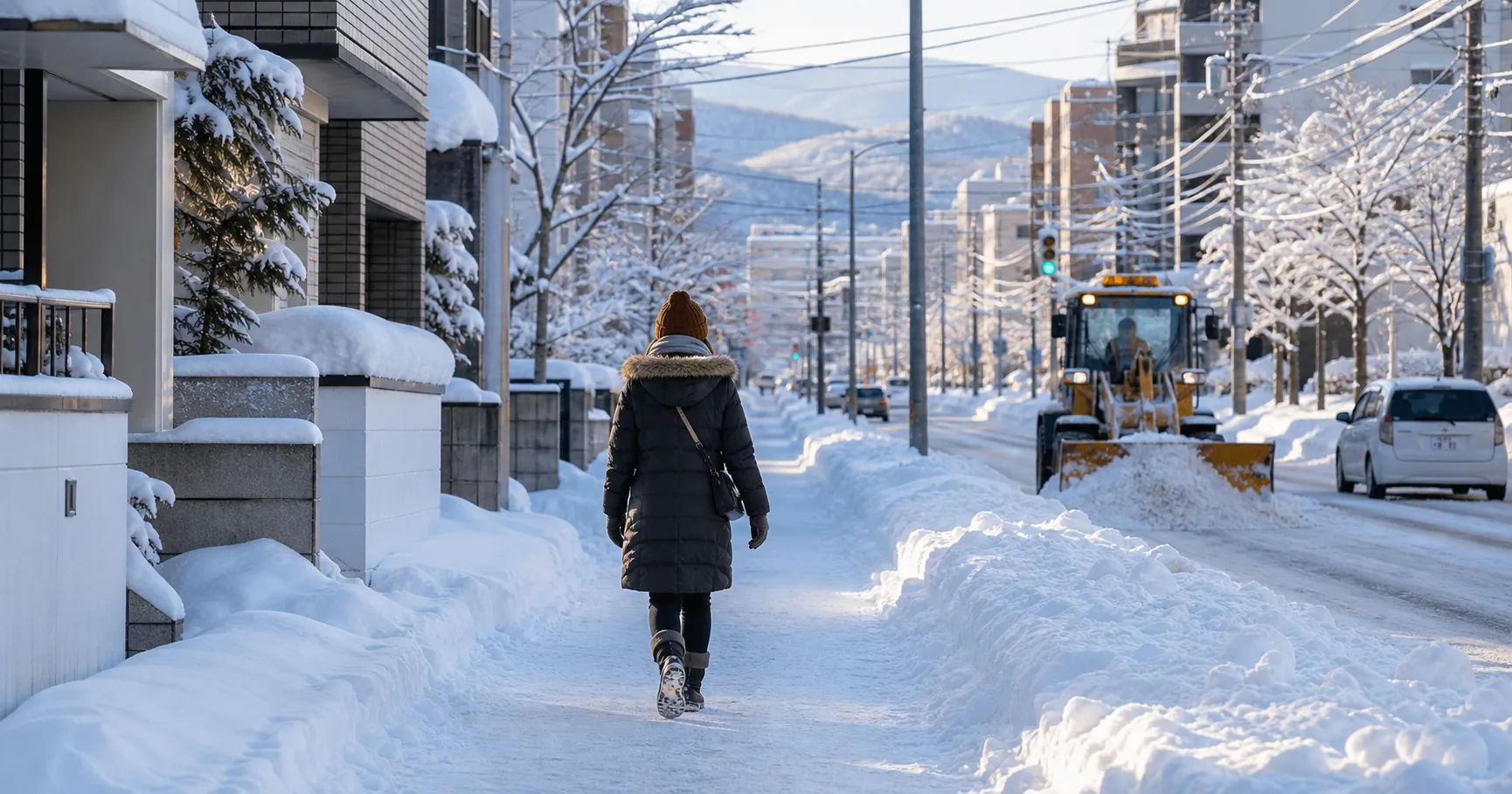
In apartment buildings, management companies often handle shared-area snow removal. In detached houses or low-rise apartments, residents may need to shovel entrances or parking spaces. Sapporo spends around ¥20 billion per year on road snow removal.
Snow hauling, or haisetsu, is different from shoveling. It means removing piled snow by truck. Public roads are handled by the city, but private-property snow piles may require paid removal services.
Transport
JR trains slow down or stop more easily during heavy snow. The subway is the most stable winter transport because it runs underground. Buses can be delayed by snow and traffic.
Cars need studless winter tires, usually changed in late October or early November. Summer tires cannot handle snow roads. New Chitose Airport can also see closures or major delays in January-February storms, so leave extra time for flights.
Daily adjustments
When temperatures fall below -4C, some homes require water-pipe draining, called mizunuki. Before leaving for several days, confirm where the drain valve is and how to use it.
Laundry does not dry outdoors in winter, so indoor drying or a dryer becomes normal. Items left on the balcony can freeze solid; locals may use the cold as storage, but bottles and containers can crack.