
Washi: kozo, mitsumata, gampi, UNESCO, and modern use
Read washi through its 3 plant fibers, hand-sheet process, UNESCO-listed production areas, conservation use, architecture, and tourist workshops.
ARTICLE MAP Reading Map
Washi is paper made from plant fiber, water, and handwork. It has about 1,300 years of history in Japan, and in 2014 UNESCO listed the techniques of Honminoshi, Sekishu-banshi, and Hosokawashi as intangible cultural heritage.
Plant fibers
Kozo has long fibers, often 10 to 20 mm, and makes strong paper. It is the main washi material, roughly 80 percent of production, and is used for calligraphy, shoji, repair paper, and general craft paper.
Mitsumata has medium fibers, about 5 to 10 mm, and a soft shine. It is used for high-quality paper and is associated with Japanese banknote paper. Gampi has shorter fibers, about 3 to 5 mm, but produces thin, smooth, durable paper and is often the expensive choice for art and conservation.
Raw material prices vary, but kozo may be around ¥3,000 to ¥8,000 per kg, mitsumata around ¥4,000 to ¥10,000, and gampi around ¥10,000 to ¥30,000 because cultivation and collection are difficult.
Hand-sheet process
Traditional handmaking has about 8 steps: cutting winter branches, steaming for 2 to 4 hours, peeling, bleaching, boiling in alkali, beating, sheet forming, and drying.
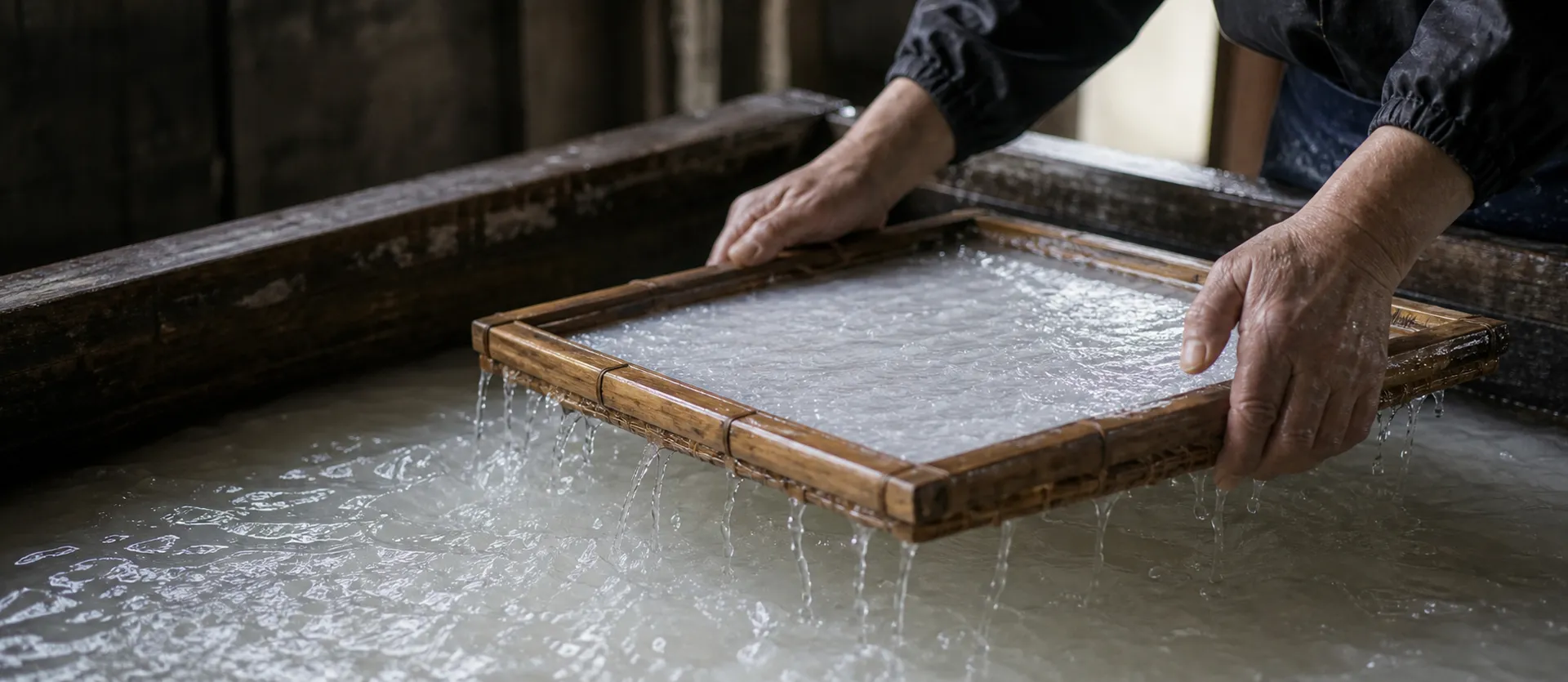
Nagashi-zuki is the Japanese method that repeatedly moves water, fiber, and neri mucilage across a bamboo screen. The repeated motion lets the fibers interlock and makes thin paper stronger than it looks.
One sheet can take 30 minutes to 1 hour depending on size and thickness. A skilled worker may make 100 to 300 sheets a day, far below industrial machine-paper output.
UNESCO areas
Honminoshi in Gifu uses 100 percent kozo and is known for thin, strong paper used in conservation. A 50-sheet pack can cost around ¥3,000 to ¥8,000.
Sekishu-banshi in Shimane is also 100 percent kozo and is valued for strength. Hosokawashi in Saitama’s Ogawa and Higashi-Chichibu area is durable and linked to document paper traditions.
Other important production areas include Echizen in Fukui, Tosa in Kochi, Yoshino in Nara, and Inshu in Tottori. Some are designated traditional crafts even when they are outside the UNESCO listing.
Modern uses
Calligraphy uses hanshi, often 26 by 35 cm. A beginner set may cost ¥1,500 to ¥3,000, while serious handmade paper can cost ¥30 to ¥100 per sheet.
Conservation is one of washi’s strongest modern roles. Very thin Honminoshi, sometimes 4 to 10 g per square meter, is used by museums and libraries to reinforce books, paintings, and documents.
Architecture uses shoji paper, fusuma paper, and washi wallpaper. Shoji paper can cost about ¥500 to ¥2,000 per square meter and is often replaced every 1 to 3 years in ordinary homes.
Design uses include Isamu Noguchi’s Akari lamps, stationery, packaging, cards, and textile experiments. Specialist shops such as Itoya and Kyukyodo sell decorative and calligraphy paper in Tokyo and Kyoto.
Workshops and mistakes
Tourist papermaking workshops are available in Echizen, Mino, Sekishu, and Ogawa. A 1-hour session often costs ¥500 to ¥2,000, but drying takes 12 to 24 hours, so mailing may cost another ¥500 to ¥1,000.
Do not confuse “Japanese-style paper” with handmade washi. Machine-made decorative paper can look similar, but material, strength, and repair value are different.
Do not use gampi as everyday practice paper. It is the premium fiber. Kozo paper is usually enough for daily calligraphy or workshops.
Useful terms
- washi
- kozo
- mitsumata
- gampi
- nagashi-zuki
- shoji paper