
Resident registration and My Number: documents you will use repeatedly
After arriving in Japan, resident registration, juminhyo, My Number, ID checks, and address changes affect banking, phones, housing, and insurance.
ARTICLE MAP Reading Map
The first administrative task after arrival is filing a moving-in notification, or tennyu todoke, at your municipal office. The deadline is within 14 days of moving into your address. Once this is done, resident records, My Number, national health insurance, bank accounts, and phone contracts become easier.
Moving-in notice and juminhyo
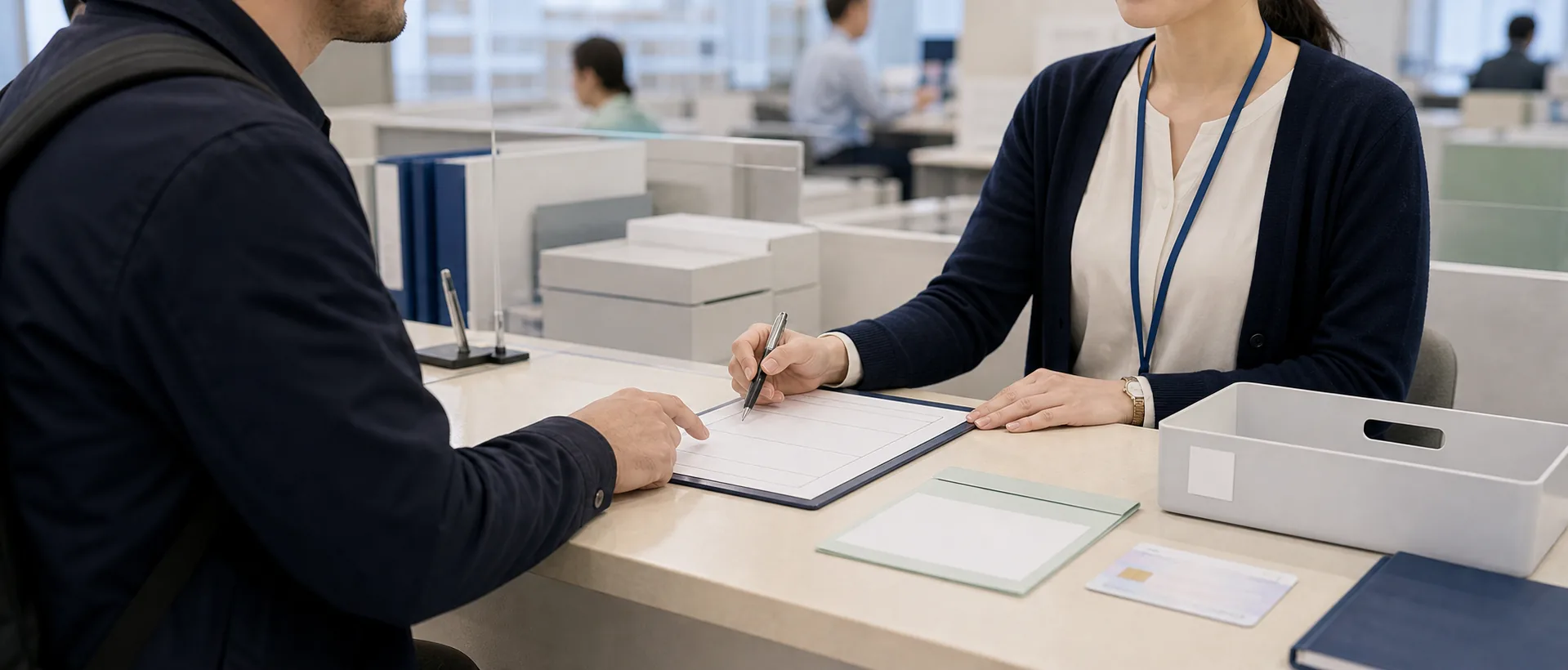
File the moving-in notice at the city or ward office for your address. Bring your residence card, passport, and exact housing address. Staff will write the official address on the back of your residence card. The process often takes 10-30 minutes.
A juminhyo copy can be issued at the same office after registration. With a My Number Card, convenience-store issuance may cost around ¥200-400 per copy. Banks, mobile carriers, schools, companies, and landlords often ask for it.
Documents used often
| Document | Use | Fee | How to get it |
|---|---|---|---|
| Juminhyo copy | Banking, phone, school, rental screening | ¥200-400 | City office / convenience store |
| Seal registration certificate | Cars, major contracts | ¥200-300 | City office after seal registration |
| Juminhyo statement certificate | Simple address proof | About ¥200 | City office |
| Juminhyo with My Number | Number confirmation | Same range | Request My Number inclusion |
For foreign residents, the residence card is the strongest everyday ID. In many procedures, residence card plus juminhyo is enough.
Identity verification
Japanese identity checks distinguish between photo ID and non-photo documents. One photo ID is often enough: residence card, My Number Card, driver’s license, or passport.
Non-photo documents often require 2 items, such as juminhyo, a qualification confirmation document (shikaku kakunin-sho), or the Basic Pension Number notice. The old paper health insurance card expired in December 2025, and the old pension booklet was abolished in 2022, so check the exact document list each counter accepts before visiting.
Address changes
After moving, file the correct notice within 14 days. Moving to another municipality requires moving-out and moving-in procedures; moving within the same municipality uses a change-of-address notice. The address on the residence card is updated at the office.
If you forget, resident tax, immigration, bank, and insurance notices may go to the old address. Japan Post mail forwarding is a separate procedure and does not update government records.
Keep official notices
Resident tax decisions, national health insurance premium notices, pension mail, and My Number Card pickup notices often arrive on paper. Receipts and payment records may be needed for tax filing, reimbursement, or loan checks.
Keep one folder per year. Before throwing anything away, check whether it relates to tax, insurance, immigration, banking, or housing.
Common mistakes
Going to a bank or mobile shop while the residence-card address is still blank can stop identity verification. File the moving-in notice within 14 days and take 2 or 3 juminhyo copies so the first week of procedures does not stall.
Japan Post mail forwarding does not update municipal, bank, immigration, or insurance records. After moving, update the municipal address within 14 days, then update the residence-card back side, bank, mobile carrier, school, and employer separately.
When a juminhyo with My Number is needed, ask the counter to include My Number. A normal juminhyo does not show the number, so tax or employer paperwork can require another copy.