
Emergency care and 119: when to call an ambulance in Japan
How to use 119, 110, #7119, night clinics, address explanations, interpreter support, ambulance arrival, and medical-cost records.
ARTICLE MAP Reading Map
In Japan, remember 3 emergency numbers: 119 for ambulance and fire, 110 for police, and #7119 for ambulance-use consultation. 119 and 110 work nationwide. #7119 is available in major areas such as Tokyo, Osaka, and Saitama, but not everywhere.
When to call 119
Call 119 for unconsciousness, breathing difficulty, chest pain, inability to move after suspected fracture, heavy bleeding, stroke symptoms, severe allergic reaction, or fire. If symptoms may be life-threatening, do not wait.
For mild fever, minor injuries when the person can walk, or non-severe chronic symptoms, a local clinic or night emergency clinic may be more appropriate. Japan has about 6.8 million ambulance transports per year, and mild cases are around 47%.
What to say
The dispatcher will ask whether it is fire or emergency medical help. Say “kyukyu desu” for ambulance. Then give address, name, phone number, symptoms, and age.
For the address, read the full Japanese address from Google Maps. Outdoors, use the nearest convenience store, station exit, or utility-pole number. If Japanese is difficult, say “Nihongo ga hanasemasen” and state your language. Some fire departments can connect interpreter services.
Before the ambulance arrives
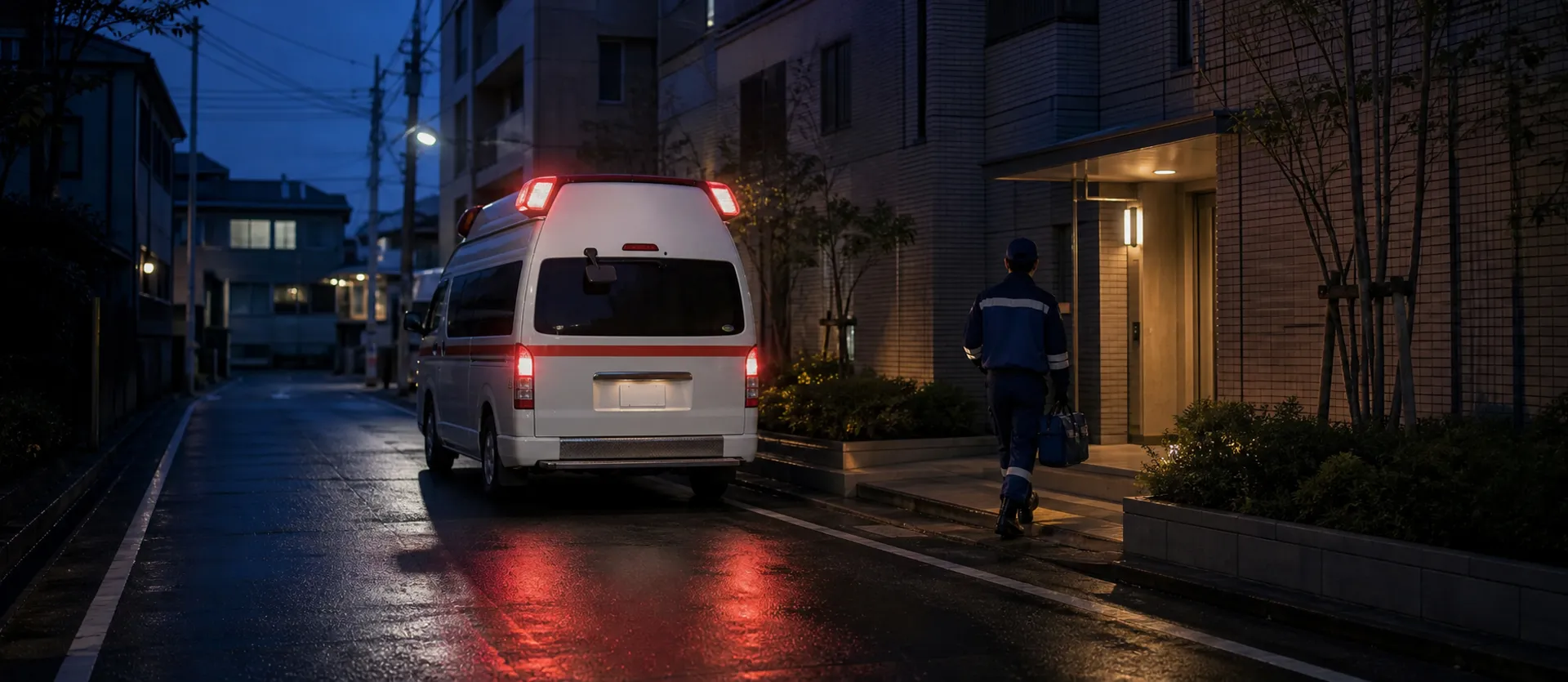
Open the door and, in an apartment building, give building number, floor, and room number. If possible, send someone downstairs to guide the ambulance crew.
Prepare health insurance card or My Number health insurance, medication notebook, residence card, and passport. Do not move someone with a suspected fracture unless necessary for safety.
#7119 and night clinics
#7119 is an ambulance consultation line. Nurses or emergency staff can help decide whether to call an ambulance. It is available in places such as Tokyo, Osaka, Saitama, and Nara, but not nationwide.
If your area does not support #7119, search for local night or holiday emergency clinics. Larger cities often have 1-3 facilities that handle late-night primary care.
Cost
Ambulance dispatch itself is free in Japan. Medical examination, tests, medicine, and hospitalization after arrival at the hospital are charged normally. With public health insurance, many residents pay 30%.
Large hospitals may add a first-visit selected medical care fee of about ¥5,500-7,700. Keep all receipts for high-cost medical benefit claims or private insurance.
Common mistakes
Calling 119 without a usable address delays arrival. Save the Japanese address for home, work, school, and the nearest station exit in the phone, and outdoors use a convenience store name or utility-pole number.
If symptoms are mild and the area supports it, use #7119 before calling an ambulance. For unconsciousness, chest pain, breathing difficulty, heavy bleeding, or stroke symptoms, call 119 first.
The ambulance is free, but hospital care and tests are billed under insurance. Without health insurance card, residence card, and medication notebook, payment and medicine checks take longer.