
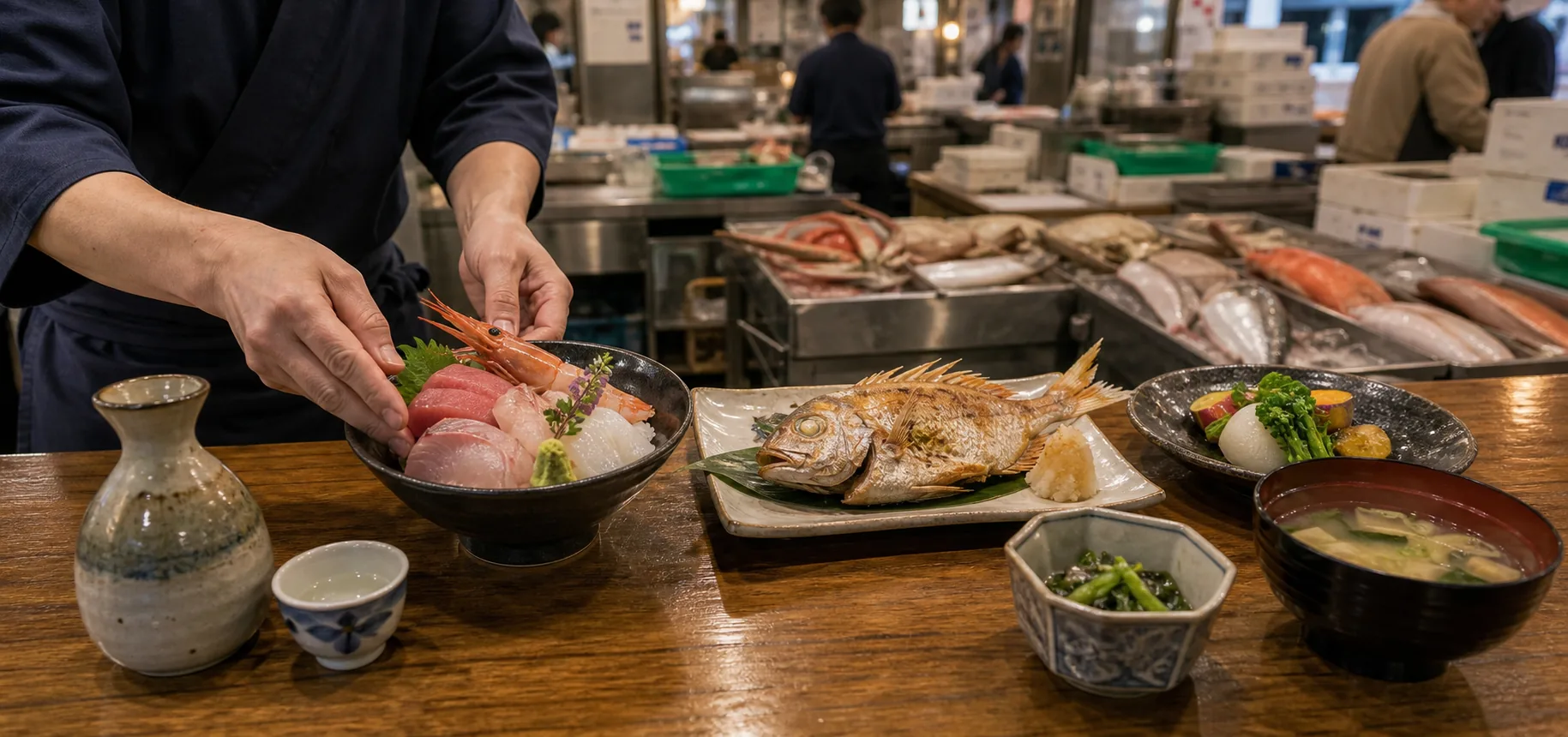
Kanazawa food: seafood, sweets, oden, and Hokuriku sake
Kanazawa food goes beyond seafood bowls. Omicho Market, nodoguro, Kaga cuisine, Kanazawa oden, wagashi, and Ishikawa sake form a deeper food route.
ARTICLE MAP Reading Map
Kanazawa food is built on seafood from the Sea of Japan and produce from the Kaga area. Seafood bowls draw the most attention, but the local table also includes Kaga cuisine, Kanazawa oden, wagashi sweets, and sake from Ishikawa and Hokuriku.
Omicho Market
Omicho Market is known as Kanazawa’s kitchen and contains about 180 shops. Opening hours vary, but 09:00-17:00 is a useful guide, with fewer shops open on Sundays.
In winter, look for snow crab, kobako female crab, and cold-season yellowtail. In summer, nodoguro, sweet shrimp, and firefly squid are easier to find. Seafood bowls usually cost ¥1,500-3,500, and lines peak from 10:00 to 13:00. Arriving around 08:30-09:30 or after 13:30 is easier.
Nodoguro and winter crab
Nodoguro is a rich white fish associated with the Sea of Japan. It works well as salt-grilled fish, dried fish, sashimi, or sushi. In Kanazawa sushi shops, two pieces often cost around ¥800-1,500.
Kobako crab is the female snow crab landed in Ishikawa. The season usually runs from November 6 to around January 10, depending on the year. A crab may cost ¥2,000-4,000, and the appeal is eating the inner roe, outer roe, and meat together.
Kaga cuisine and Kanazawa oden
Jibuni is a representative Kaga dish. Duck or chicken is coated lightly, then simmered with Kaga vegetables and wheat gluten in dashi. At local cuisine restaurants, expect about ¥1,500-3,000 for a dish or set.
Kanazawa oden uses local ingredients such as kurumafu wheat gluten, Gensuke daikon, and bai-gai shellfish. Izakaya portions often cost ¥150-350 each. Sanko and Kuroyuri are well-known old shops, and winter evenings can be crowded.
Wagashi and tea culture
Kanazawa is often grouped with Kyoto and Matsue as a major wagashi city. The tradition is tied to Kaga Domain tea culture, so seasonal fresh sweets, dry sweets, and rakugan sugar sweets matter as much as gift boxes.
Morihachi was founded in 1625 and is known for Choseiden. Koshiyama Kanseido sells seasonal namagashi for around ¥400-600 each, while Shibafune Koide’s ginger-flavored sweets often run ¥800-2,000 per box. Kanazawa Station’s Hyakubangai is useful for comparing several brands before departure.
Hokuriku sake
Representative Ishikawa sake brands include Kikuhime and Tengumai from Hakusan, Fukumasa from Kanazawa, and Sogen from the Noto area. At izakaya, one go, or 180 ml, usually costs around ¥550-900.
Richer yamahai-style sake pairs well with nodoguro, jibuni, and Kanazawa oden. Shops around Omicho Market and Kanazawa Station offer tastings, but lunchtime crowds make it easier to buy after the market rush.