
The 1923 Great Kanto Earthquake: Fire, Killings Fueled by Rumor, the Rebuilding of Tokyo, and Yokoamicho Park and the Sumida Bridges Today
At 11:58 on September 1, 1923, a magnitude 7.9 earthquake struck the Kanto region. About 105,000 people died, most in fires, including about 38,000 at the former Army Clothing Depot site in Honjo alone. Rumors after the quake led to the killing of Koreans and Chinese. The reconstruction of the capital produced Showa Street, the Eitai and Kiyosu bridges, new parks and schools, and September 1 became Disaster Prevention Day.
ARTICLE MAPReading Map
SERIESJapanese HistoryFrom the eras overview to single events, each tied to places you can still visit.8 parts
Start here
Classical and medieval
Sengoku and Edo
Modern era
- 06Meiji Restoration
- 071923 earthquake
War and postwar
The Great Kanto Earthquake struck on September 1, 1923 (Taisho 12), and remains the deadliest natural disaster in Japan’s modern history. Many of eastern Tokyo’s wide roads, the steel bridges over the Sumida River, and old corner schools were built in the decade of reconstruction that followed, and every September 1 is Disaster Prevention Day because of it. The sections below cover the disaster, the killings that followed it, and the rebuilding, matched to places you can visit in Sumida and Chuo wards.
Two minutes before noon
At 11:58 on September 1, 1923, an earthquake estimated at magnitude 7.9, centered under the northwestern part of Sagami Bay, struck Tokyo, Kanagawa, and the surrounding area. The Cabinet Office’s Central Disaster Management Council report puts the death toll at about 105,000. On the Kanagawa side, collapsed houses and landslides did severe damage, Yokohama and Odawara were devastated, and a tsunami hit the coast.
The main reason so many died was fire. The quake struck at lunchtime, when households were cooking over charcoal and stoves, and strong winds that day spread fires that broke out all over Tokyo and burned for two days. The former Army Clothing Depot site in Honjo, on the east bank of the Sumida, was a large open lot where crowds of evacuees gathered with their belongings. A fire whirlwind swept through it, and about 38,000 people are thought to have died there.
Source: Cabinet Office: 1923 Great Kanto Earthquake report.
Rumors and killings
Beyond the fires, the days after the quake brought a man-made atrocity. Rumors that Koreans were setting fires or poisoning wells spread in the chaos, and some soldiers and police, along with vigilante groups (jikeidan) formed by local residents, killed large numbers of Koreans. Chinese people, and Japanese mistaken for Koreans, were also killed.
The second volume of the report published in 2009 by a Central Disaster Management Council expert panel says the killers included officials as well as survivors and local residents, that Koreans were the largest group of victims, with many Chinese and Japanese as well, and that while the exact number cannot be established, it amounts to between 1% and several percent of the earthquake’s death toll. The report was written by outside experts using historical sources, and the government does not treat the report as its official position; it has repeatedly told the Diet, most recently in a July 2026 written answer, that it has found no records within government that establish the facts. That the killings happened is documented; the precise number of victims and the extent of institutional responsibility remain debated. In Oshima, in eastern Tokyo, Chinese laborers were killed en masse in what is known as the Oshima-machi Incident.
The report records this history as one of the disaster’s lessons: rumor in a disaster can cause a second wave of harm.
Sources: Cabinet Office: 1923 Great Kanto Earthquake report, volume 2, chapter 4 section 2 (PDF), Cabinet Office: 1923 Great Kanto Earthquake report, volume 2.
Rebuilding the capital: wide roads, steel bridges, and parks
After the quake, Tokyo began a rebuilding effort known as teito fukko, the reconstruction of the imperial capital. The Imperial Capital Reconstruction Agency was set up in September 1923 under Home Minister Goto Shinpei, and the work continued until 1930.
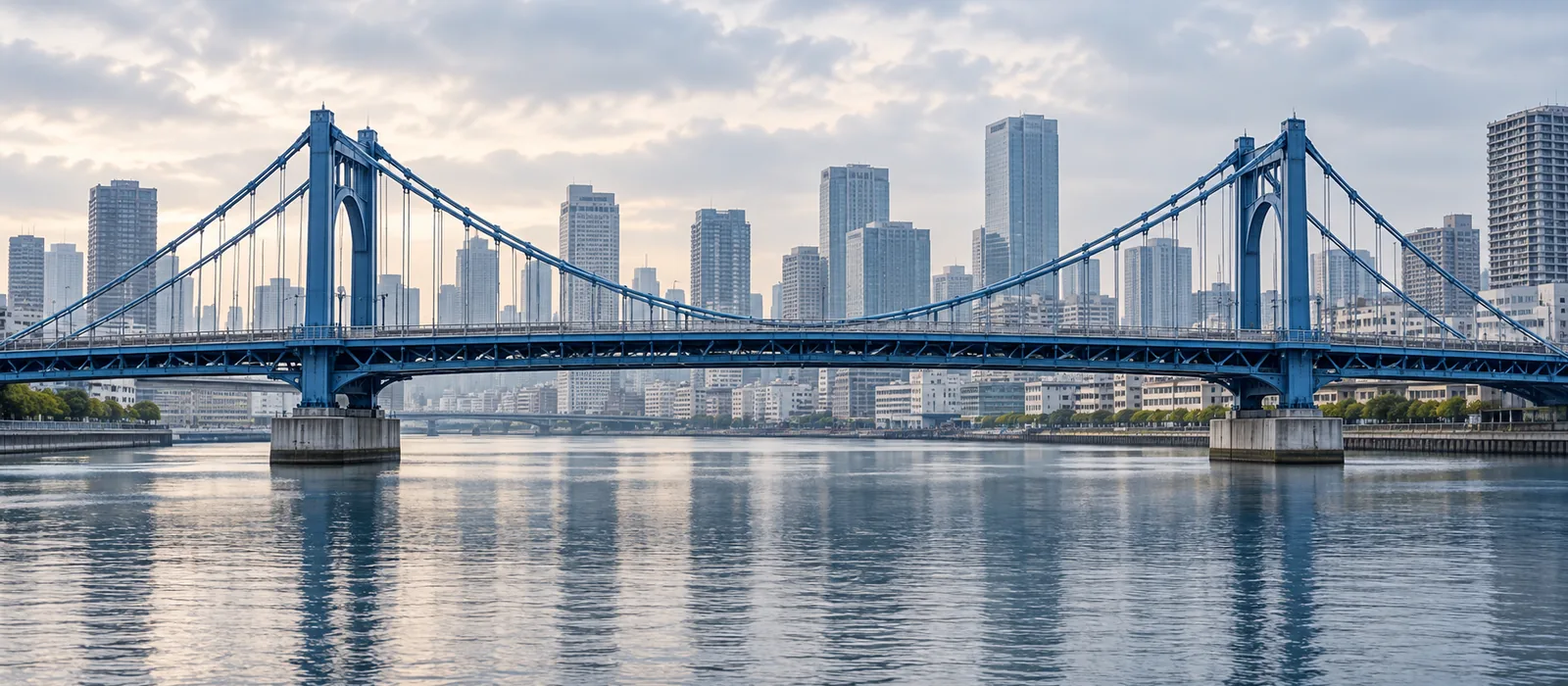
The first plan was enormous and was cut back sharply, but it still left the framework of today’s Tokyo. Showa Street, linking Shimbashi and Ueno, was completed in 1928; Goto’s original plan called for a width of 108 m, and the built road is much narrower. On the Sumida, bridges whose wooden decks had burned were replaced with fireproof steel bridges, nine of them built by the reconstruction program. The first finished was Eitai Bridge in 1926, and Kiyosu Bridge, a self-anchored suspension bridge, followed in 1928. Both were later designated Important Cultural Properties.
The reconstruction also created three parks as evacuation spaces, Sumida, Hamacho, and Kinshi parks. Primary schools were rebuilt in reinforced concrete, each with a small park beside it, known as reconstruction schools, and the Dojunkai foundation built reinforced-concrete apartment blocks around the city. Some reconstruction schools are still in use in Chuo and Taito wards.
Source: Cabinet Office: Build Back Better (Sumida River bridges).
Places to visit today
The results of the rebuilding and the memory of the disaster are concentrated around Sumida and Chuo wards.
The former Clothing Depot site is now Yokoamicho Park in Sumida, about a 10-minute walk from JR Ryogoku Station. The Tokyo Memorial Hall in the park honors the dead of both the earthquake and the 1945 Tokyo air raids, and the neighboring Tokyo Reconstruction Memorial Museum displays objects warped by the fires and records of the rebuilding. Both are free; the museum is open from 9:00 to 17:00 and closed on Mondays. The park also has a memorial to the Korean victims of the earthquake, erected in 1973, and memorial events are held here every September 1.
Along the Sumida you can walk between the reconstruction bridges. From Eitai Bridge upstream to Kiyosu Bridge is about 1.5 km along the riverside Sumida River Terrace walkway, and the bridges are lit up at night.
Sources: Yokoamicho Park (Tokyo Memorial Association), Tokyo Reconstruction Memorial Museum: visitor information.
September 1, Disaster Prevention Day
The earthquake’s lessons went straight into policy. In 1960 the government named September 1 Disaster Prevention Day, and since 1982 the week containing it has been Disaster Prevention Week. Drills are held around the country, and some local governments send test emergency alerts to phones in their area. How to prepare is covered in disaster preparedness.
In city planning, the idea of using wide roads, parks, and fireproof buildings as firebreaks carried over into postwar reconstruction and today’s work on Tokyo’s dense districts of wooden houses.
Common misunderstandings
Last, a few points that are often confused.
The first is assuming most victims were crushed in collapsing houses. In Tokyo most died in fires, while in Kanagawa collapses and landslides accounted for more of the deaths; the two areas suffered in different ways.
The second is treating the killings as the work of a few people who lost control. They were large in scale, soldiers and police took part, and the Cabinet Office’s expert report formally records them as a lesson of the disaster.
The third is assuming the reconstruction was completed as planned. Goto Shinpei’s original plan was cut heavily for financial reasons and in the face of opposition, and the width of Showa Street is one example.
The fourth is thinking the Tokyo Memorial Hall is only an earthquake memorial. Since 1951 it has also honored the victims of the 1945 Tokyo air raids, mourning both disasters together.
Useful terms
- Kanto daishinsai: the Great Kanto Earthquake
- Hifukusho ato: the former Army Clothing Depot site
- Jikeidan: vigilante groups
- Teito fukko: reconstruction of the capital
- Bosai no hi: Disaster Prevention Day