
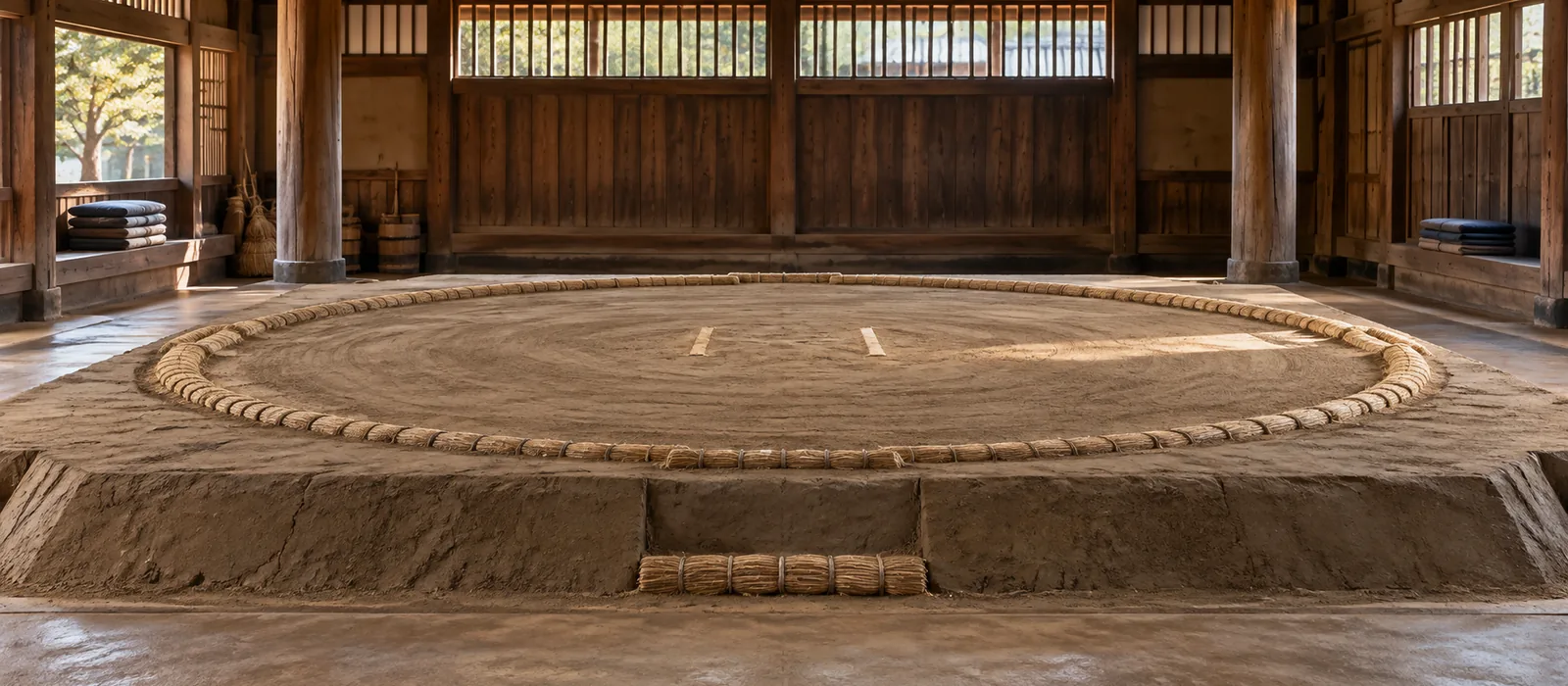
Grand Sumo: Six Tournaments a Year, the Banzuke and Yokozuna, How to Buy Tickets, and Where to Watch
Professional sumo holds six 15-day tournaments a year: January, May, and September at the Ryogoku Kokugikan in Tokyo, March in Osaka, July in Nagoya, and November in Fukuoka. The banzuke ranking has six divisions from jonokuchi to makuuchi, and the top-division bouts late in the afternoon are the highlight. Tickets are sold through the Japan Sumo Association's official Ticket Oosumo site in ringside, box, and chair seats, and some stables let visitors watch morning practice between tournaments.
ARTICLE MAPReading Map
SERIESTraditional Japanese CultureBelief, performing arts, crafts, and the Ainu and Ryukyuan cultures, each with where to see them today.11 parts
Grand sumo (ozumo) is professional sumo run by the Japan Sumo Association. It is a sport, but it keeps many Shinto rituals: the salt thrown before a bout, the wrestlers’ topknots and belts, and the referee’s costume are all rules handed down over centuries. The sections below explain how tournaments work, how the ranks are ordered, and how to buy tickets and what to watch at the venue.
Six tournaments a year, 15 days each
Official competition takes place at honbasho, grand tournaments held six times a year in odd-numbered months, each lasting 15 days from a Sunday to a Sunday. January, May, and September are at the Ryogoku Kokugikan in Tokyo, March at Edion Arena Osaka, July at IG Arena in Nagoya, and November at Fukuoka Kokusai Center.
Over the 15 days, top-division wrestlers fight one bout a day, and the best record wins the top-division championship. Bouts start a little after 8:00 in the morning, from the lowest rank upward; the top makuuchi division begins at about 15:40 and finishes before 18:00, with the final bout usually fought by a yokozuna. There is no need to arrive early: getting there at 14:00 or 15:00 lets you see the juryo and makuuchi divisions.
Source: Japan Sumo Association.
The banzuke: from jonokuchi to yokozuna
Wrestlers’ rankings, the banzuke, are published before each tournament and move up or down according to the previous record. From the bottom, the six divisions are jonokuchi, jonidan, sandanme, makushita, juryo, and makuuchi. Wrestlers in juryo and above are called sekitori; they receive a salary and attendants, may wear colored silk belts, and tie their hair in the elaborate oichomage topknot.
Makuuchi is divided further into maegashira, komusubi, sekiwake, ozeki, and yokozuna. The top two ranks have special rules: an ozeki who has losing records in two straight tournaments is demoted, while a yokozuna cannot be demoted and can only sit out or retire when out of form. A yokozuna performs a ring-entering ceremony wearing a thick white rope (tsuna) and stamping in the ring, one of the daily highlights before the top-division bouts.
Tickets: Ticket Oosumo and three kinds of seat
The official ticket outlet is the Japan Sumo Association’s Ticket Oosumo website. Sale dates differ by tournament, and the popular Osaka tournament and Tokyo weekends sell out fast. Resale above face value is banned, and there is an official face-value resale system.
There are three kinds of seat. Tamari seats sit right by the ring, the closest to the wrestlers, but food, drink, and photos are banned, and wrestlers can fall into the crowd. Masu seats are boxes of floor cushions for about four people, where you can eat a bento while watching, sold by the box. Chair seats are upstairs or at the back and are the easiest for one person; a Chair A seat at the Nagoya tournament costs JPY 4,500. Some tournaments sell a few same-day tickets at the venue in the morning, so check official announcements.
Sources: Ticket Oosumo, Japan Sumo Association.
What to see at the Kokugikan
The Sumo Museum inside the Ryogoku Kokugikan is also open outside Tokyo tournaments (during tournaments, only to ticket holders), with photos of past yokozuna, ranking sheets, and ceremonial aprons. Chanko stew cooked in the Kokugikan’s basement kitchen is served inside during tournaments, and the yakitori in the arena’s bento is a local favorite.
Ryogoku is sumo’s neighborhood. The west exit of JR Ryogoku Station has wrestlers’ handprints and statues, and sumo stables and chanko restaurants are dotted around the area.
Watching morning practice
To see wrestlers up close outside tournaments, you can watch morning practice (asageiko) at a sumo stable. Many stables are around Ryogoku and Kiyosumi-Shirakawa, and they practice from roughly 7:00 to 10:00.
Whether visitors are allowed depends on the stable, and most require booking in advance through the stable or a travel agency; some tours come with an interpreter. Visitors sit quietly in a set place, do not talk, do not use flash, and do not point their feet toward the ring. These rules are there so you do not disturb the wrestlers’ training, so check them before going in.
Common misunderstandings
Last, a few points that are often confused.
The first is thinking there are official bouts every day. Grand tournaments add up to 90 days a year; the rest of the time is regional tours and training.
The second is going early to grab a seat. Mornings are lower-division bouts with few spectators, and the top division starts after 15:40, so arriving in the afternoon is enough.
The third is assuming women can step into the ring. The Sumo Association still does not allow women onto the dohyo, award ceremonies included, a rule that is debated within Japan.
The fourth is buying marked-up tickets on resale sites. The association bans resale above face value and such tickets can be cancelled; use the official face-value resale instead.
Useful terms
- Ozumo: professional grand sumo
- Honbasho: grand tournament
- Banzuke: ranking list
- Yokozuna: the highest rank
- Asageiko: morning practice