
Ainu Culture: Hokkaido's Indigenous People, Their Language, Beliefs, and Crafts, and Upopoy in Shiraoi
The Ainu are an Indigenous people centered on Hokkaido, with their own language, beliefs, and crafts. The Ainu Promotion Act, in force since 2019, was the first law to name the Ainu as an Indigenous people, and Upopoy, home to the National Ainu Museum, opened in Shiraoi in 2020; adult admission is JPY 1,200. Traditional Ainu dance was added to UNESCO's intangible heritage list in 2009, and many Hokkaido place names come from the Ainu language.
ARTICLE MAPReading Map
SERIESTraditional Japanese CultureBelief, performing arts, crafts, and the Ainu and Ryukyuan cultures, each with where to see them today.11 parts
Belief and festivals
Performing arts and sumo
Crafts and architecture
Diverse Japan
- 10Ainu culture
- 11Ryukyu and Okinawa
The Ainu are an Indigenous people who have lived mainly in Hokkaido and historically also in southern Sakhalin, the Kuril Islands, and the northern tip of Honshu, with their own language, beliefs, and way of life. “Ainu” means “human” in the Ainu language. Many people think of Japan as ethnically uniform; the Ainu, and the Ryukyuan culture covered next, are two ways into the diversity within the country.
A worldview of living with nature
Traditional Ainu belief holds that kamuy, spirits or gods, dwell in everything: bears, salmon, fire, water, boats, and household tools are all kamuy come into the human world in some form. The bear is one of the most important kamuy, believed to bring its fur and meat to people as gifts, so rituals send its spirit back to the world of the gods. Such sending rituals are called iomante.
Traditional life centered on hunting, fishing, and gathering. Salmon swimming upriver in autumn was a key food, and salmon skin was even made into boots. A village is a kotan and a house a cise (chise), built from plant materials such as reeds and bamboo grass.
Language, oral literature, and place names
Ainu is a completely different language from Japanese. It traditionally had no writing, and stories and knowledge were passed on by word of mouth. Kamuy yukar, epic songs in which gods tell their own stories, are the best-known oral literature. The Ainu Shin’yoshu (Ainu Songs of the Gods), published in 1923, was written down in roman letters with Japanese translations by Chiri Yukie, an Ainu woman, the first such record made by an Ainu person.
Very few people now speak Ainu as a first language, and UNESCO classifies it as critically endangered; language classes and radio courses around Hokkaido are working to revive it. Many Hokkaido place names come from Ainu. Shiretoko, for example, is usually explained as “the end of the earth”.
Assimilation and recognition as an Indigenous people
The Ainu’s modern history is one of assimilation. In 1869 the Meiji government set up the Hokkaido Development Commission, renamed Ezo as Hokkaido, and settlers from the rest of Japan moved in to farm it. The Hokkaido Former Aborigines Protection Act of 1899, though framed as protection, pushed the Ainu into farming and Japanese-language schooling and restricted traditional hunting and fishing, doing great damage to the language and customs.
The act was only abolished in 1997, when a law to promote Ainu culture replaced it. In 2008 the Diet passed a resolution urging the government to recognize the Ainu as an Indigenous people, and the Ainu Promotion Act, in force since 2019, was the first law to state in its text “the Ainu people, who are an Indigenous people”, and provided for a national symbolic space for ethnic harmony. It also includes limited special measures: Article 16 lets residents of certified municipalities jointly gather forest products in national forests under the common-forest system, for Ainu ceremonies and cultural use, and Article 17 asks officials to give due consideration to permits for catching salmon in inland waters for traditional ceremonies and fishing techniques. It contains no apology and no comprehensive recognition of Indigenous land or fishing rights, which remains a point of criticism.
Sources: Ministry of Justice: end prejudice and discrimination against the Ainu, Agency for Cultural Affairs: promotion of Ainu culture.
Upopoy in Shiraoi
The symbolic space required by the act is Upopoy, opened in July 2020 in Shiraoi, Hokkaido; the name means “singing together in a large group” in Ainu. It is made up of the National Ainu Museum, the National Ainu Park, and a memorial site. The park recreates a traditional kotan and cise houses, and runs more than 20 programs every day, including traditional dance, mukkur mouth-harp performances, and craft workshops.
Adult admission is JPY 1,200. It is open from 9:00 to 18:00 from April to October and 9:00 to 17:00 in winter, and closed on Mondays (the next weekday after a holiday). It is about a 10-minute walk from JR Shiraoi Station, roughly an hour by limited express from Sapporo.
Source: Upopoy (National Ainu Museum and Park).
Other places to experience Ainu culture
Beyond Upopoy, there are centers of Ainu culture across Hokkaido.
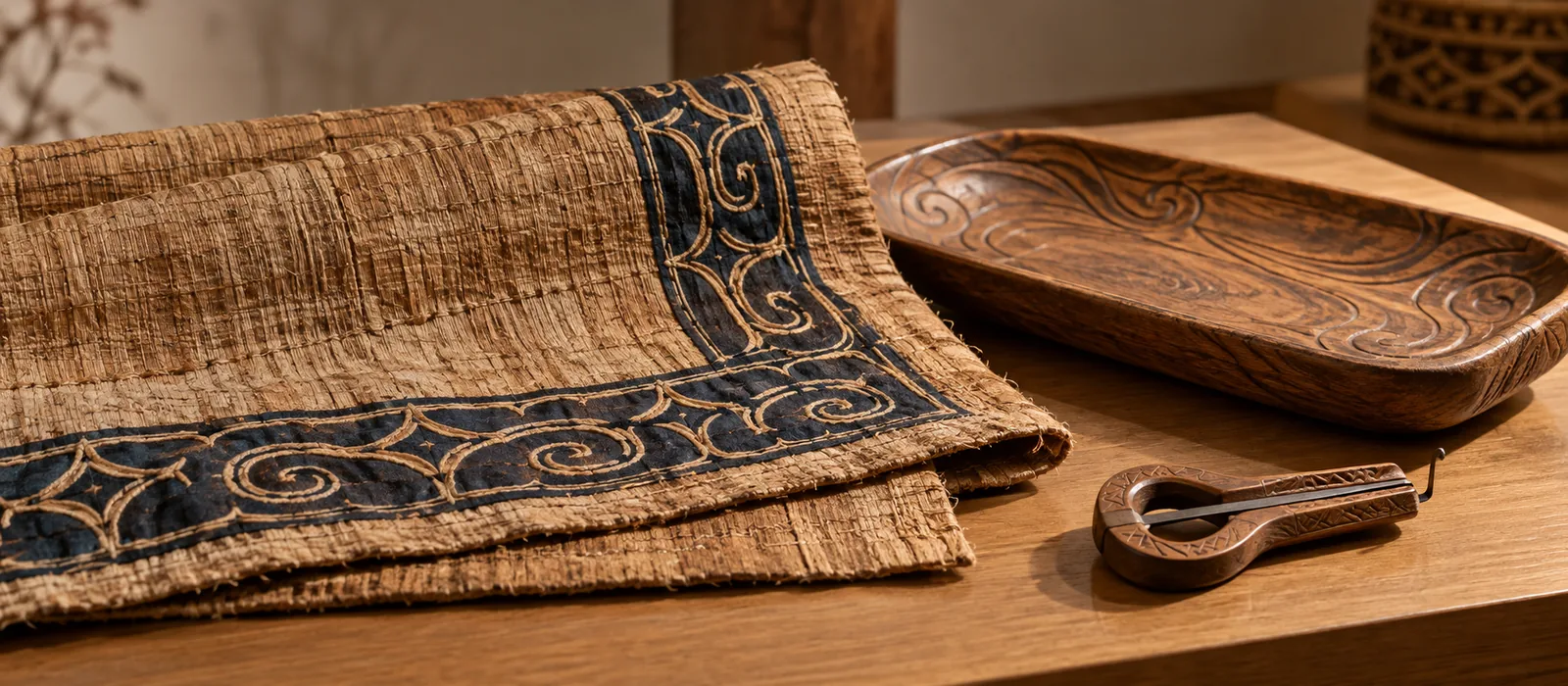
Nibutani in Biratori is an area where many Ainu people live. The Nibutani Ainu Culture Museum displays tools and woodcarving, and craft workshops are nearby. Nibutani ita (carved trays) and Nibutani attus (bark-fiber cloth) were designated Traditional Crafts by the Minister of Economy, Trade and Industry in March 2013, the first, and still the only two, from Hokkaido.
On Lake Akan in eastern Hokkaido, Akanko Ainu Kotan is a street of Ainu-run craft shops and restaurants, and the Lake Akan Ainu Theater Ikor stages traditional dance and contemporary works using digital imagery every day. Traditional Ainu dance was inscribed on UNESCO’s Representative List of the Intangible Cultural Heritage in 2009.
Sources: Biratori Town: traditional crafts (Nibutani ita and attus), Agency for Cultural Affairs: intangible cultural heritage.
Common misunderstandings
Last, a few points that are often confused.
The first is thinking Ainu culture has disappeared. Ainu people still live in Hokkaido and across Japan, language revival and the passing on of crafts and dance continue, and many of Upopoy’s staff are Ainu.
The second is treating the Ainu as “Hokkaido folk entertainment”. The Ainu have their own language and history and are an Indigenous people recognized in law; their culture should be understood as the culture of a people.
The third is assuming Indigenous issues have been settled. The Promotion Act has no apology, and its narrow forest and salmon measures stop well short of recognizing rights to land or fishing, and lawsuits over salmon fishing rights and complaints of discrimination continue.
The fourth is photographing rituals and displays casually. Some rituals and the memorial site do not allow photos, so check the signs first.
Useful terms
- Ainu: “human” in the Ainu language
- Kamuy: spirits or gods
- Kotan / cise: village / house
- Ainu shisaku suishin ho: the Ainu Promotion Act
- Upopoy: the national Ainu museum and park